
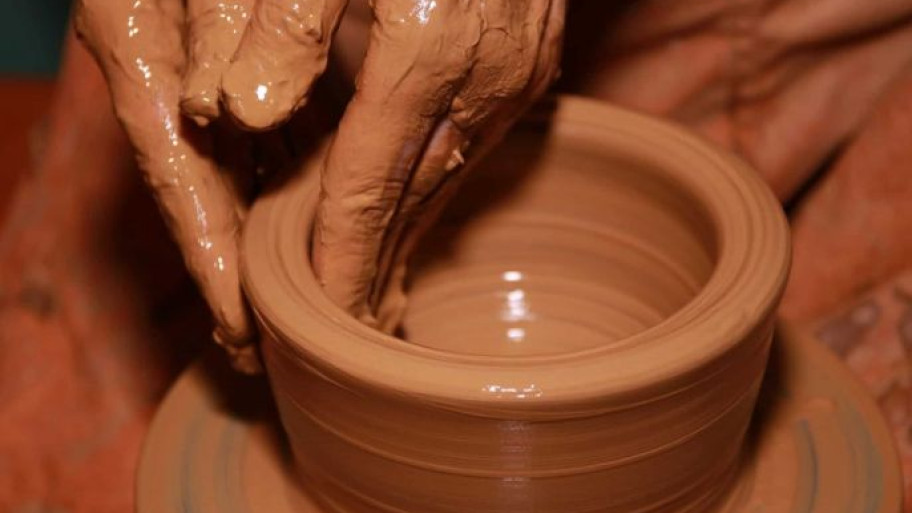
The art of ceramic pottery has held a significant place in both the daily lives and artistic expressions of humanity for thousands of years. This ancient art, where earth is shaped by combining it with water and then given a permanent form by firing, is one of the oldest and most enduring legacies of human history.
What is the Art of Pottery?
Pottery is the art of making various vessels (jugs, bowls, vases, etc.) by shaping clay and firing it in a kiln.
In its most general definition, pottery can be described as the production process where clay is shaped on a wheel or by hand, then fired to gain durability, and finally made ready for use.
What is Earthenware?
The terms "pottery" and "ceramics" generally refer to objects obtained by shaping and firing clay. Pottery primarily refers to vessels made for daily use within the pottery tradition, while ceramics is a broader term encompassing all objects obtained by firing various clay-based materials, including pottery products.
- Pottery & Ceramics: A term generally used for vessels obtained by shaping and firing clay in a kiln. Pottery is a craft branch that involves the making of these vessels.
- It includes products obtained by firing at high temperatures. Therefore, pottery is also a type of ceramic product.
- In summary: Pottery is part of the ceramics family and primarily refers to vessels within the pottery tradition. Ceramics, on the other hand, is a broader term that includes these vessels as well as other clay-based products.
Ceramics & Pottery Making:
Ceramic pottery is a craft in which various objects, especially vessels, are shaped from clay and fired in a kiln. This craft is used for both functional and artistic purposes. As old as human history, this art is used to produce both kitchenware (water jugs, earthenware pots, casseroles, etc.) and decorative objects (vases, sculptures, ornaments, etc.).
Basic stages of ceramic pottery making:
- Clay Preparation: The clay to be used in pottery making is mixed with water to form mud and kneaded.
- Shaping: The prepared mud is shaped on a potter's wheel or by hand. The clay, spinning on the wheel, is skillfully transformed into the desired forms.
- Drying: The shaped pottery is then dried in the shade.
- Firing: The dried pottery is hardened and made durable by firing in high-temperature kilns.
- Glazing (Optional): Some pottery is coated with glaze, an aesthetic and protective layer. Glazing gives the pottery a shine and makes it waterproof.
The Art of Ceramic Pottery Making:
- Develops dexterity: The shaping process improves hand-eye coordination and fine motor skills.
- Supports creativity: Ceramics allows individuals to use their imagination and design skills.
- Reduces stress: Ceramics reduces stress by promoting focus and mental relaxation.
- Preserves cultural heritage: As a traditional craft, ceramics preserves cultural heritage and passes it on to future generations.
- Creates decorative objects: Ceramic pottery can also be used as decorative objects to beautify homes and living spaces.
